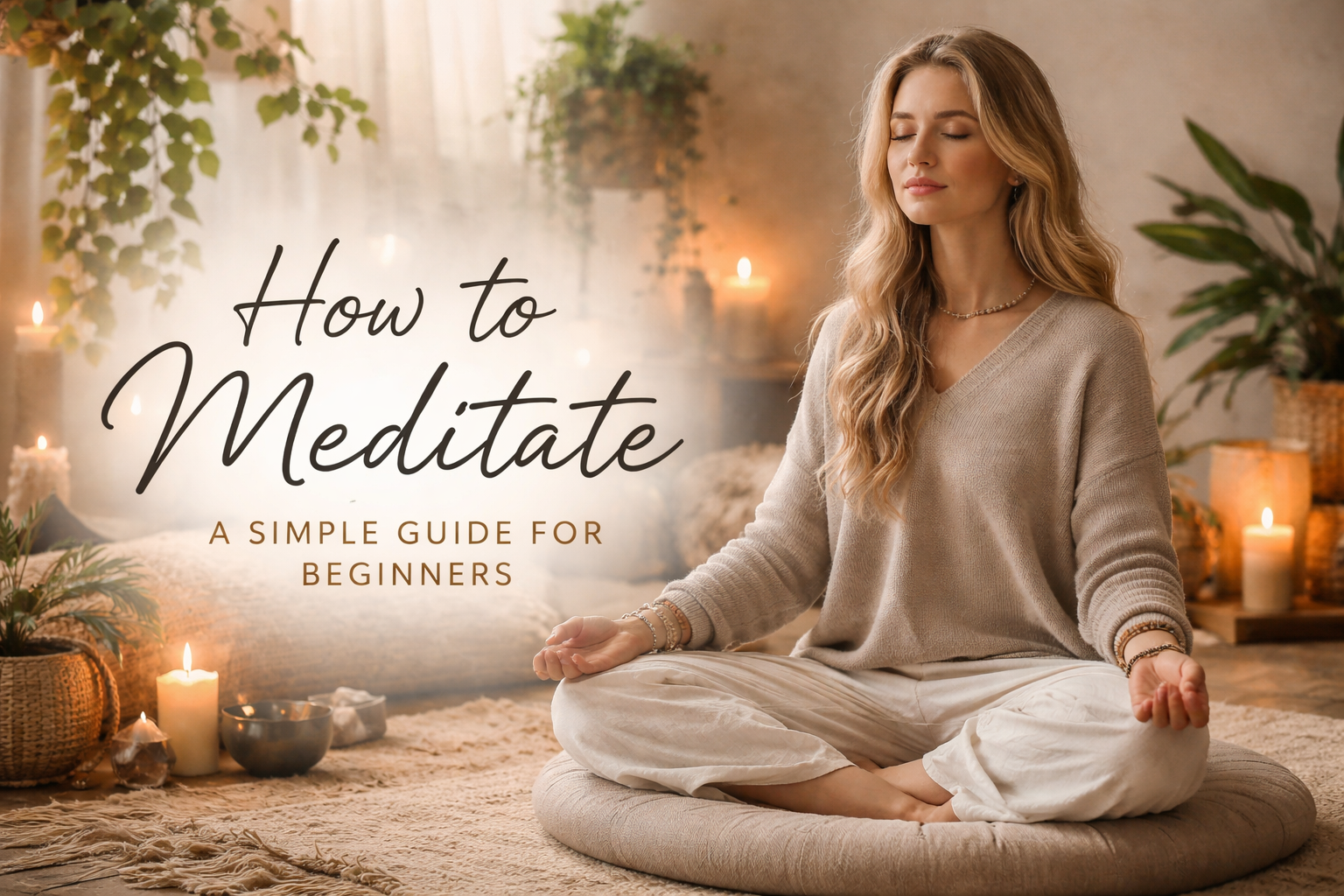
How to Meditate (A Simple Beginner Guide That Actually Works)
Galina Razumovsky- Sacred Sova, Golden, CO.
Most beginner methods fail because they’re too complicated.
You don’t need:
- crystals
- incense
- a 30-minute routine
- perfect silence
You need one reliable method:
The Breath + Awareness Method
- Sit comfortably
- Focus on your breath.
- Thoughts appear
- Notice them
- Return to the breath.
- Repeat
That’s the real practice.
Step-by-Step: How to Meditate (Exact Instructions)
Step 1: Choose a Time You Can Repeat Daily
Pick a time that’s realistic:
- morning (best for consistency and clarity)
- midday reset (if you get overstimulated)
- evening (if you need stress relief)
Start with 5 minutes.
Not 20. Not 60.
Five minutes daily will change your baseline over time.
Step 2: Choose a Simple Space
Meditation doesn’t require a “special place.”
Just pick:
- a chair
- a cushion
- a corner of the room
The goal is to remove friction.
Meditation should be easier than scrolling.
Step 3: Sit in a Way That Supports Awareness
Posture matters because it affects alertness.
Best posture basics:
- spine tall but relaxed
- shoulders soft
- hands resting on thighs or in the lap
- chin slightly tucked
- eyes closed or softly lowered
If your hips or knees hate sitting on the floor—use a chair. You’ll meditate better.
Step 4: Pick Your Anchor (Breath Is the Best)
You focus on one thing, so your brain has a single point of focus.
Choose one:
- breath at the nostrils
- belly rising/falling
- breath counting
If you’re a beginner, counting is gold.
Step 5: Use This Beginner Technique (Counting Breath)
Do this:
Inhale… 1
Exhale… 1
Inhale… 2
Exhale… 2
Continue up to 10
Then restart at 1
You WILL lose track.
That’s the practice.
Every time you notice you drifted, calmly restart at 1.
Step 6: What to Do When Thoughts Appear
Thoughts will appear. This is not a problem.
When you notice your mind drifting:
- notice it
- label it softly
- return
Labels:
- “thinking”
- “planning”
- “worrying”
- “remembering”
- “judging”
Then return to breath.
No drama. No self-attack.
Meditation is not self-improvement through violence.
Step 7: How to End Meditation Properly
Most people ruin the benefit by immediately jumping into tasks.
Instead:
- Take one deeper breath.
- feel your body
- open eyes slowly
- Notice your mental/emotional state.
This teaches your nervous system: stillness is safe.
How Long Should You Meditate?
Most people ask this because they’re hoping for the “perfect number.”
Here’s the truth: consistency beats duration.
A realistic meditation plan:
- Week 1: 5 minutes/day
- Week 2: 7 minutes/day
- Week 3: 10 minutes/day
- Month 2: 12–15 minutes/day
The magic is repetition.
If you miss a day, you’re not “off track.” You’re just human. Start again tomorrow.
Common Meditation Mistakes (That Keep People Stuck)
Mistake #1: Trying to stop thinking
That’s impossible.
The mind produces thoughts the way the lungs produce breath.
Meditation is learning not to obey every thought.
Mistake #2: Believing you must feel peaceful
Meditation sometimes feels uncomfortable because you’re finally present with yourself.
That discomfort isn’t a sign of failure.
It’s emotional digestion.
Mistake #3: Doing too much, too soon
Starting with 30 minutes usually leads to quitting.
Start with 5 minutes. Win daily. Grow naturally.
Mistake #4: “I’m not spiritual enough.”
Meditation doesn’t care what you believe.
Meditation is awareness.
That’s a human ability, not a religion.
Meditation for Anxiety (Fast Nervous System Reset)
If anxiety is your main problem, do not start by trying to “go deep.”
Start by regulating the body.
3-Minute Calm Method
- Inhale 4 seconds
- exhale 6–8 seconds
- Repeat slowly for 3 minutes.
- keep attention on the breath sensation
Longer exhales tell your nervous system: you’re safe.
This is one of the fastest ways to move out of fight-or-flight.
If you want a more detailed writing practice to pair with anxiety work, read: journaling for anxiety vs journaling for purpose.
What If I Can’t Sit Still?
Then don’t start yet.
Start with moving meditation, because some bodies need movement to feel safe.
Options:
- slow yoga with breath awareness
- walking meditation (feel each step)
- body scan meditation
Stillness isn’t the requirement.
Awareness is.
Signs Meditation Is Working (Real Signs)
People expect mystical experiences.
Real transformation looks like:
- You react less
- You recover faster
- You notice triggers earlier.
- You stop believing every thought.
- You feel more grounded in your body.
- You can be uncomfortable without collapsing.
This is spiritual power.
Not performance.
Journaling After Meditation (The Sacred Sova Upgrade)
Meditation makes the mind quieter. Journaling makes the insight visible.
After you meditate, write for 2–5 minutes.
Ask:
- What am I truly feeling right now?
- What do I need today—emotionally, physically, spiritually?
This is how you rebuild self-trust.
If you want a guided structure that takes you deep without spiraling, use The Journal (Sacred Sova Interactive Journal).
If You Want Support: Don’t Do This Alone
Meditation is simple—but going deeper is easier with real guidance.
Sacred Sova sessions integrate breath, awareness, subtle movement, and spiritual alignment practices designed to calm the mind and open the inner path.
Explore options here: Sacred Sova yoga and meditation.
Final Truth: Meditation Is Coming Back
Meditation is not sitting perfectly.
Meditation is:
coming back
again and again
without punishment.
Your mind will wander. That’s guaranteed.
You’re not training the mind to be silent.
You’re training yourself to be free.
Q: How do I meditate if I’m a beginner?
A:Start with 5 minutes daily. Sit comfortably, focus on the breath, and every time you notice thinking, gently return to the breath. That returning is the meditation.
Q: What should I focus on during meditation?
A:The best beginner focus is breath: either the sensation at the nose, the rise and fall of the belly, or counting breaths from 1 to 10.
Q:Is it normal to think during meditation?
A:Yes. Thoughts are normal. Meditation is not stopping thoughts—it’s noticing them and returning to your anchor without getting pulled into the story.