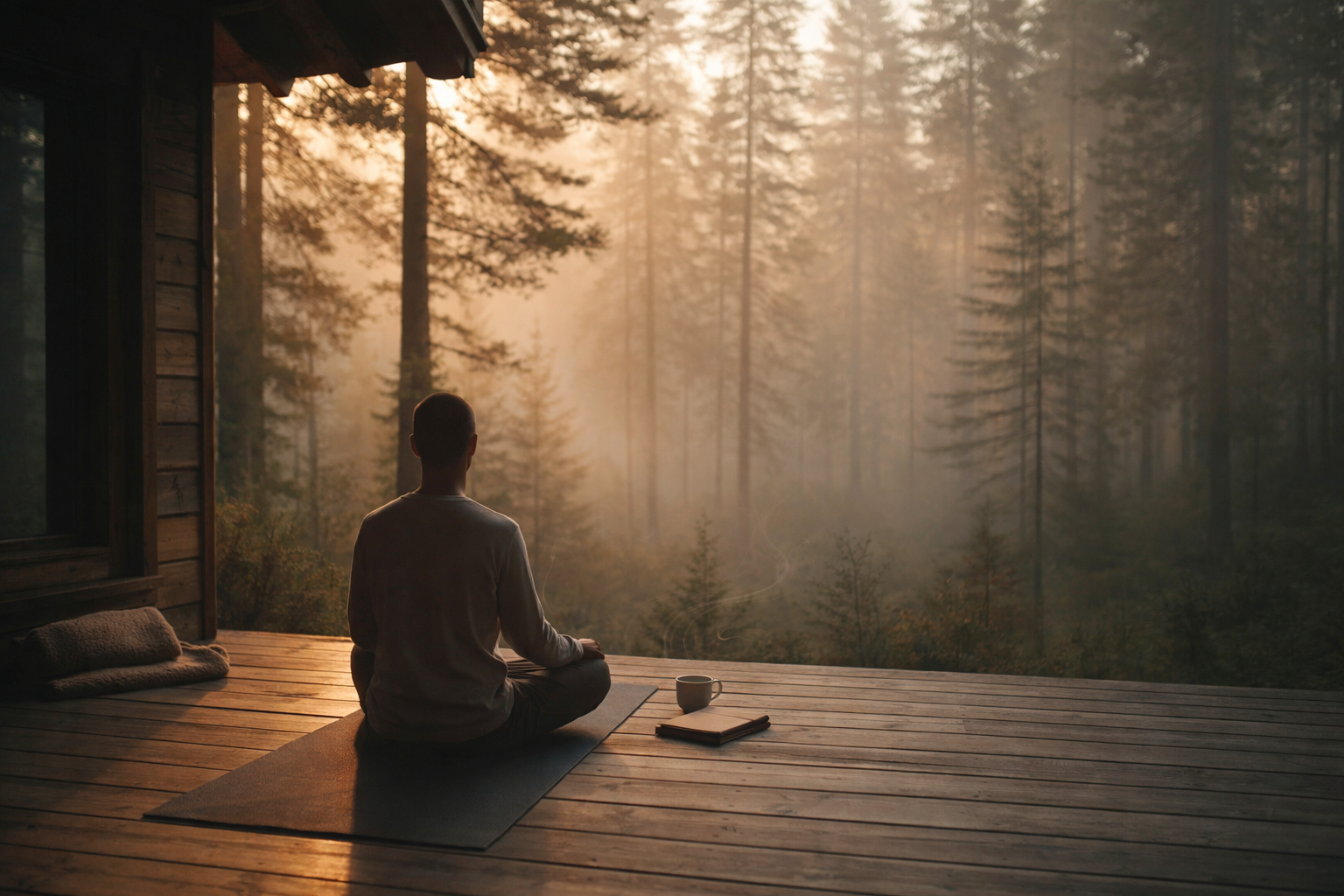
How to Calm the Nervous System Naturally (Yoga + Breath + Journaling)
Galina Razumovsky- Sacred Sova, Golden, CO.
Real regulation. No need for pills or spiritual bypassing.
When your nervous system is dysregulated, everything feels harder than it should.
- You overthink.
- You can’t relax even when nothing is happening.
- You snap at people you love.
- Your sleep becomes light, broken, or weird.
- Your body holds tension like it’s preparing for impact.
The hardest part: You can’t just think your way out.
Most people get stuck trying to calm anxiety through logic, planning, and more self-help strategies. But your nervous system responds to safety, not ideas—a critical distinction for real regulation.
So in this guide, we’re going to do this the right way — naturally, practically, and in the correct order. Let’s start by understanding what calming the nervous system truly means and how it sets the foundation for everything that follows:
- Regulate the body (yoga + breath)
- Discharge mental noise (journaling that calms, not spirals)
- Create stability over time (a repeatable system)
This is the Sacred Sova style: grounded mindfulness, nervous system work, and inner clarity.
What Does “Calming the Nervous System” Actually Mean?
To calm the nervous system means shifting your body from a fight-or-flight or freeze state into a rest-and-digest state.
A regulated nervous system looks like:
- slower, deeper breathing
- relaxed jaw and belly
- warmer hands/feet
- calmer thoughts
- improved digestion
- ability to focus without panic
- less reactivity (emotionally and physically)
A dysregulated nervous system looks like:
- shallow breathing
- tight chest or throat
- jaw tension
- insomnia
- digestive issues
- racing thoughts
- irritability
- feeling “unsafe” for no logical reason
This isn’t a weakness. This is physiology.
You can be mentally strong and still be physically dysregulated.
The #1 Mistake: Trying to Fix Anxiety With More Thinking
Many anxious people are unclear about how to journal for regulation.
They write:
- long analyses
- “Why am I like this?”
- “What’s wrong with me?”
- mental loops about relationships, money, identity, future fears
Journaling like this doesn’t help you regulate.
It can make your nervous system feel even tighter.
If you want journaling to calm your nervous system, it has to be:
- short
- physical
- present-based
- sensation-focused
- gentle and grounding
If you want a deeper explanation of the difference (important), read this Sacred Sova post:
Journaling for Anxiety vs. Journaling for Purpose: https://sacredsova.com/journaling-for-anxiety-vs-journaling-for-purpose/
The Natural Regulation Framework (The Only One You Need)
Here’s the simple formula that works:
✅ BODY first → then MIND
Not the other way around.
Because the nervous system doesn’t care that you “know” you’re safe.
It responds to breath, movement, rhythm, and sensation.
That’s why the most natural tools are:
- Yoga (especially grounding + slow holds)
- Breathwork (especially long exhales)
- Journaling (to discharge mental pressure without analysis)
Part 1 — Yoga to Calm the Nervous System
Yoga is one of the fastest ways to regulate because it works through:
- pressure into the ground
- slow movement
- muscle release
- interoception (feeling inside your body)
- breath-body synchronization
The key: slow yoga, not intense yoga
If you’re anxious or stressed, pushing yourself through a hard flow often keeps you in sympathetic mode.
For regulation, you want:
- restorative yoga
- yin-style holds
- slow transitions
- long exhale breathing
The Best Yoga Styles for Nervous System Calming
1) Restorative Yoga
Best for: insomnia, burnout, chronic stress, emotional exhaustion
2) Yin Yoga
Best for: tension, anxiety, emotional buildup, shallow breathing
3) Slow Hatha
Best for: nervous system stability + strength without stress
9 Yoga Poses That Calm the Nervous System (Naturally)
Do these with slow breathing (3–6 minutes each).
1) Child’s Pose (Balasana)
Why it works:
- soft belly pressure
- Inward fold calms the brain.
- helps release the back body
How:
- forehead on mat or block
- arms forward or by the sides
- slow nasal breath
2) Legs Up the Wall (Viparita Karani)
Why it works:
- reduces heart rate
- shifts circulation
- calms “wired tired” energy
How:
- hips close to the wall
- Knees can bend
- Stay 5–15 minutes
3) Supported Forward Fold
Why it works:
- stimulates the vagus nerve via gentle compression
- signals safety to the brain
4) Supine Twist (Supta Matsyendrasana)
Why it works:
- decompresses spine
- releases belly tension (stress storage)
- helps digestion and exhale length
5) Cat-Cow (Marjaryasana/Bitilasana)
Why it works:
- Rhythmic spinal movement regulates the brainstem.
- improves breath depth naturally
6) Reclined Bound Angle (Supta Baddha Konasana)
Why it works:
- opens hips (fear/tension storage zone)
- softens chest breathing
Add:
- pillow under knees
- hand on belly
7) Bridge Pose (Supported Setu Bandha)
Why it works:
- opens chest without activation
- supports deeper breathing
8) Standing Forward Fold (Uttanasana)
Why it works:
- Blood flow toward the head shifts the nervous tone.
- neck release = immediate calming effect
Bend knees deeply. Do not strain.
9) Savasana (but done correctly)
Most people “rest” in savasana while their minds are still spinning.
Real savasana:
- long exhales
- tongue relaxed
- jaw loose
- shoulders heavy
- attention anchored in the body
Mini Yoga Routine (15 minutes)
If you’re overwhelmed, do this:
- Cat-Cow — 1 minute
- Child’s Pose — 2 minutes
- Supine Twist (R) — 2 minutes
- Supine Twist (L) — 2 minutes
- Legs Up the Wall — 5 minutes
- Savasana — 3 minutes
That alone can shift you out of fight/flight.
Part 2 — Breathwork That Actually Calms You (No Hyperventilation)
If your nervous system is anxious, do NOT start with aggressive breathwork.
Fast breathing can increase panic.
You want parasympathetic breath:
- nasal breathing
- slow inhale
- longer exhale
The exhale is the brake pedal.
Best Breathing Techniques for Nervous System Regulation
1) Physiological Sigh (Fast reset)
This is your emergency tool.
How:
- Inhale through the nose
- Take a second, small top-up inhale.
- long slow exhale through the mouth
Do 3 rounds.
Why it works:
It’s a built-in nervous system reset.
2) 4–6 Breathing (Simple, powerful)
Inhale 4 seconds
Exhale 6 seconds
Repeat for 5 minutes
This is one of the most reliable calm-down tools on earth.
Nothing fancy. Just effective.
3) Humming Exhale (Vagus nerve activation)
Inhale nose
Exhale with a quiet hum (“mmm”)
Do 10 rounds.
Humming stimulates the vagus nerve mechanically, through vibration.
The Breath Rule That Changes Everything
If your breath stays shallow, your nervous system stays anxious.
So your only real job is:
make the exhale longer
That’s it.
Part 3 — Journaling That Regulates (Not Journaling That Spirals)
The Sacred Sova Approach: Regulate, Then Reflect
We don’t journal to “solve life.”
Instead, journaling is for releasing tension and experiencing greater internal space.
Anxiety journaling = nervous system tool
Purpose journaling = clarity tool
Do them in the wrong order, and you spiral.
Again, if you want the full breakdown, read:
https://sacredsova.com/journaling-for-anxiety-vs-journaling-for-purpose/
The 5-Minute Nervous System Journal Protocol
Do this after breathwork or yoga.
Set the timer for 5 minutes.
Write without stopping.
Prompts (choose 1)
- “Right now my body feels…”
- “My nervous system is holding…”
- “The fear underneath the noise is…”
- “What I need today is…”
- “If I stopped fighting this moment, what would soften?”
Rules:
- no future planning
- no relationship analysis
- no fixing
- describe sensations and truth
The Best Journaling Prompts for Regulation
Use these anytime you’re activated:
- What sensation is strongest in my body right now?
- Where do I feel tension? Jaw, chest, belly, throat?
- What is my nervous system protecting me from?
- What would feel safe right now (realistically)?
- What do I need less of today?
- What do I need more of today?
- What would happen if I slowed down by 20%?
- What am I trying to control because I feel unsafe?
- What is one small thing I can release today?
- If my body could speak, it would say…
The Most Effective “All-in-One” Routine (20 minutes)
If you want something simple and repeatable:
Step 1 — Breath (5 min)
4–6 breathing
Step 2 — Yoga (10 min)
Child’s Pose → Twist → Legs Up Wall
Step 3 — Journal (5 min)
Prompt: “Right now my body feels…”
Do this 4–6 times per week.
You’ll feel the shift quickly.
Lifestyle Habits That Calm the Nervous System Naturally
These aren’t glamorous, but they work.
1) Walk daily (especially after meals)
Walking regulates:
- blood sugar
- vagal tone
- stress hormones
2) Light exposure in the morning
Morning sunlight trains the circadian rhythm = better sleep = calmer nervous system.
3) Less caffeine (or caffeine with food only)
Many people call it “anxiety” when it’s literally caffeine dysregulation.
4) Stop multitasking
Multitasking is nervous system chaos disguised as productivity.
5) Reduce sensory overload
Lower:
- screen brightness
- loud audio
- scrolling
- constant notifications
If your nervous system never gets silence, it never repairs.
Why Your Nervous System Might Not Calm Down (Even if You Do Everything Right)
Sometimes, regulation doesn’t happen because of hidden factors:
- chronic sleep deprivation
- unresolved grief
- trauma stored in the body
- emotional suppression
- toxic relationship dynamics
- overworking
- lack of safety in your environment
In those cases, calming the nervous system is not a “technique” issue.
It’s a life design issue.
And that’s where deeper spiritual tools can help uncover the real root.
If you’re drawn to inner pattern work, explore the Game of Leela approach on Sacred Sova:
https://sacredsova.com/photo-gallery/
A Calm Nervous System = Spiritual Clarity
Many people think they need more spiritual insight.
But what they really need is:
a calmer body
Because calm is what makes intuition audible.
If your nervous system is constantly activated:
- You confuse anxiety with intuition.
- You make decisions based on urgency.
- You chase clarity but can’t hold it.
This is why regulation is the foundation of all deeper practice.
For more Sacred Sova grounding + mindfulness resources, your main hub is:
https://sacredsova.com/blog/
Q: What is the fastest way to calm the nervous system naturally?
A:The fastest natural method is breath regulation, especially longer exhales (like 4–6 breathing) plus a grounding posture such as Child’s Pose or Legs Up the Wall. These shift the body out of fight/flight into rest-and-digest.
Q: Can yoga really calm anxiety and nervous system stress?
A:Yes. Yoga calms anxiety by regulating breath, releasing muscular tension, and stimulating the parasympathetic nervous system through slow movement and grounding. Restorative and yin yoga are the most effective styles for nervous system calm.
Q:How long does it take to regulate the nervous system?
A:You can often feel improvement in 5–20 minutes with breathwork and restorative yoga. Long-term nervous system stability usually improves within 2–6 weeks of consistent practice, depending on lifestyle stress levels.