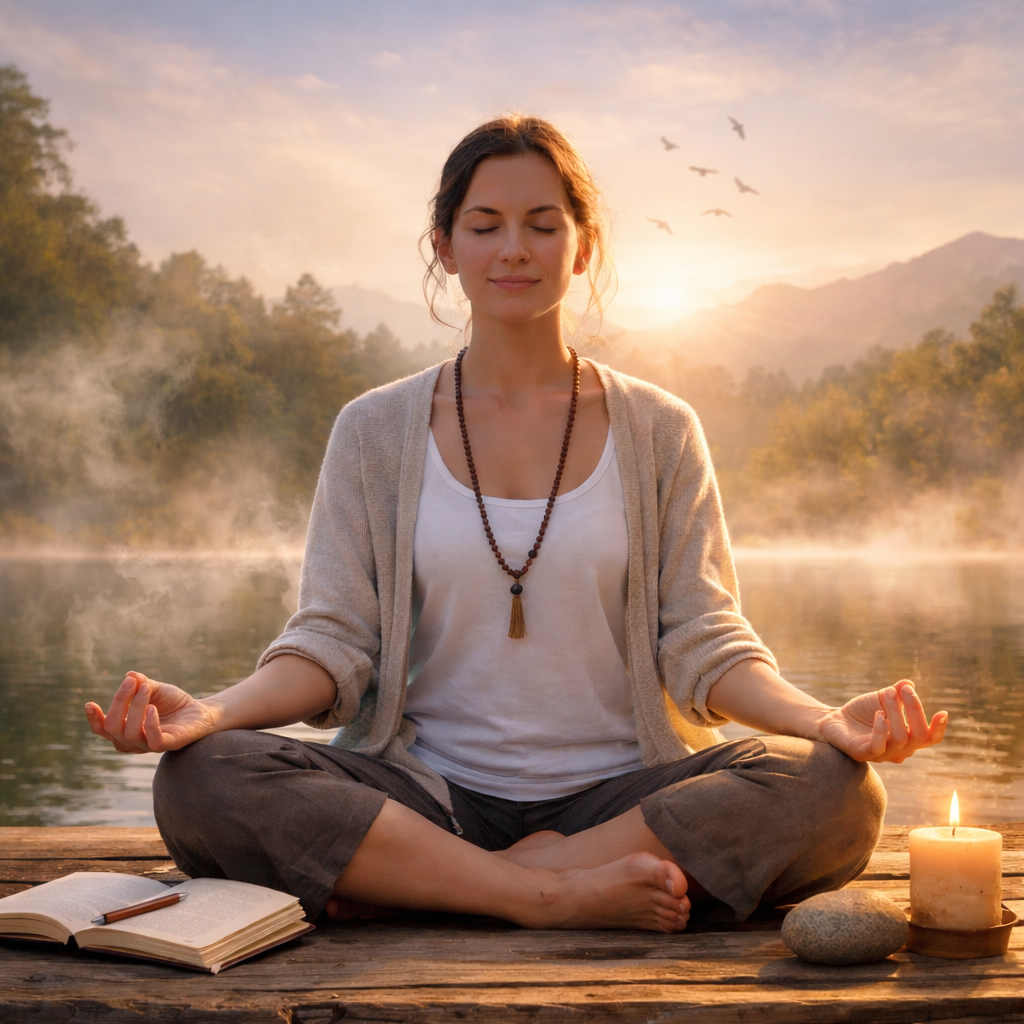
Meditation for Anxiety: How to Reset, Unwind, and Reclaim Inner Peace
Galina Razumovsky- Sacred Sova, Golden, CO.
Anxiety is not weakness. It is a nervous system that hasn’t learned how to rest.
If you live in constant mental noise — racing thoughts, tight chest, shallow breathing — your body is stuck in survival mode. You don’t need another productivity hack. You need a reset.
Meditation for anxiety is not about escaping life. It is about rewiring how you respond to it. When practiced correctly, meditation allows you to unwind, regulate your nervous system, and return to peace — without suppressing what you feel.
This guide will show you exactly how meditation works for anxiety, which practices are most effective, and how to combine meditation with journaling to create lasting stability.
Why Anxiety Happens (And Why You Can’t Think Your Way Out of It)
Anxiety is a physiological loop.
Your brain perceives threat → your body releases stress hormones → your breath becomes shallow → your heart rate increases → your thoughts speed up → the body interprets this as danger again.
You get trapped in the cycle.
Trying to “think positive” inside this loop does not work. Anxiety lives in the nervous system, not in logic. Meditation works because it directly interrupts the stress response.
When you slow your breath and anchor attention, you send a signal to the body: You are safe.
That is the reset.
What Meditation Actually Does for Anxiety
Regular meditation practice:
- Activates the parasympathetic nervous system
- Lowers cortisol levels
- Reduces rumination
- Improves emotional regulation
- Increases tolerance for uncertainty
In simple terms, meditation teaches your body how to unwind.
The key is consistency. Five to ten minutes daily will do more than one long session once a month.
The Best Types of Meditation for Anxiety
Not all meditation styles are equal when anxiety is high. Some practices can even increase overthinking if done incorrectly. These methods are grounded and effective.
1. Breath Regulation Meditation (Immediate Reset)
This is the fastest way to calm anxiety.
Practice:
- Sit upright.
- Inhale through the nose for 4 counts.
- Exhale slowly for 6–8 counts.
- Continue for 5 minutes.
Longer exhales activate vagal tone and reduce stress response. Your body cannot remain in a state of panic while breathing this way.
Use this anytime anxiety spikes.
2. Body Awareness Meditation (Grounding Practice)
Anxiety pulls you into the future. The body brings you back to now.
Practice:
- Close your eyes.
- Scan your body from feet to head.
- Notice sensations without labeling them as good or bad.
- If thoughts arise, return to sensation.
This builds tolerance. You learn to feel discomfort without reacting.
3. Mantra Meditation (Mental Stabilizer)
When thoughts are intrusive, give the mind one clear anchor.
Repeat silently:
“So Hum”
Inhale “So.”
Exhale “Hum.”
The repetition reduces mental noise and builds internal steadiness.
If you want structured guidance, explore Sacred Sova’s dedicated meditation sessions here:
👉 https://sacredsova.com/yoga-meditation/
Meditation + Journaling: The Powerful Combination
Meditation calms the nervous system. Journaling organizes the mind.
If you meditate but never process your thoughts, anxiety can return through suppressed emotion. If you journal without calming your body first, you may reinforce stress.
The correct sequence:
- Meditate for 5–10 minutes.
- Journal immediately after.
- Write freely without editing.
Questions to guide your journaling:
- What am I actually afraid of?
- What is in my control today?
- What am I avoiding feeling?
Sacred Sova’s guided journal tools are designed exactly for this integration. If you need structured prompts, explore the Journal collection here:
👉 https://sacredsova.com/journal/
Taking time for yourself in this way is not indulgent. It is maintenance.
How Long Until Meditation Reduces Anxiety?
You may feel immediate relief after one session. But structural change requires repetition.
Week 1:
You notice slight moments of calm.
Week 2–3:
You respond rather than react more often.
After 1–2 months:
Baseline anxiety lowers.
Meditation is not a quick fix. It is nervous system training.
Common Mistakes People Make
1. Trying to Stop Thoughts
Meditation is not about eliminating thoughts. It is about observing them without attachment.
2. Forcing Stillness
If sitting increases anxiety, start with walking meditation or breathwork first.
3. Inconsistency
Daily short practice beats occasional long sessions.
A Simple 10-Minute Daily Reset Routine
If you want structure, use this:
Minute 1–2: Slow breathing
Minutes 3–6: Body scan
Minutes 7–9: Mantra repetition
Minute 10: Set one clear intention for the day
Then journal for 5 minutes.
That is your anxiety reset ritual.
When Anxiety Feels Overwhelming
If anxiety is chronic, meditation becomes even more important — but also more nuanced.
In deeper work, anxiety often connects to:
- Unresolved emotional patterns
- Boundary issues
- Suppressed anger
- Fear of uncertainty
Meditation opens awareness. Reflection deepens it.
If you are ready to explore the deeper psychological layers behind anxiety, you may find value in Sacred Sova’s work with consciousness and awareness through transformational self-inquiry, including the symbolic structure explored in the Game of Leela:
👉 https://sacredsova.com/game-of-leela/
Anxiety is rarely random. It usually points to something unexamined.
Taking Time for Yourself Is Non-Negotiable
An anxious mind convinces you that you do not have time to rest.
That is exactly when you must pause.
Five minutes of meditation:
- Improves clarity
- Reduces emotional reactivity
- Restores perspective
- Supports peace
Taking time for yourself is not selfish. It is how you remain stable in relationships, work, and decision-making.
You cannot pour calm into others if your own system is overwhelmed.
The Science Behind Meditation for Anxiety
Research consistently shows:
- Mindfulness meditation reduces amygdala activation (the fear center).
- Regular practice strengthens the prefrontal cortex (rational regulation).
- Breath-focused meditation improves heart rate variability.
This is measurable. Not spiritual theory — biology.
Meditation rewires stress response patterns.
If You Struggle to Sit Still
Start small.
- Meditate lying down.
- Use guided recordings.
- Focus on breath only.
- Keep sessions under 5 minutes at first.
Perfection is not required. Repetition is.
Long-Term Peace Is Built, Not Found
Peace is not the absence of stress. It is the ability to remain centered inside it.
Meditation for anxiety builds:
- Emotional resilience
- Nervous system flexibility
- Self-awareness
- Inner stability
Over time, anxiety loses its authority.
Final Integration: Reset, Unwind, Return
Anxiety pulls you outward. Meditation brings you inward.
When combined with journaling and conscious reflection, it becomes a complete reset system.
You do not need to escape your life.
You need to regulate your nervous system within it.
Start with five minutes today.
Unwind your breath.
Observe your thoughts.
Write honestly.
Take time for yourself.
Peace is not somewhere else.
It is underneath the noise.
A Final Invitation to Go Deeper
Travel can open the door — but what you do with that opening determines how long the reset lasts.
If you’re ready to move beyond temporary relief and into lasting clarity, Sacred Sova was created for that purpose.
The Sacred Sova Journal supports reflection, emotional integration, and nervous system regulation — during travel and in daily life:
https://sacredsova.com/the-journal/
You don’t need to go far to reset.
You need space, intention, and the right tools.
The journey inward never ends — only deepens.
When you’re ready for more, the owl knows where to find you.
— Sacred Sova
Questions and Answers:
Q: How often should I meditate for anxiety?
A:Daily. Even 5–10 minutes consistently is enough to create change.
Q: How do I know it’s working?
A:You respond more calmly. Your breath deepens naturally. Reactivity decreases.
Q:Is journaling necessary?
A:Not required, but highly recommended. It helps integrate emotional awareness and prevent mental looping.